

Introduction
Most minor wounds heal on their own with basic care — clean, cover, and keep an eye on it. But for people with diabetes or vein disease, a wound that isn't behaving as expected can be a sign that something more is going on beneath the surface. Knowing when to move from home care to specialist care can make the difference between a straightforward recovery and a prolonged one.
What Healing as Expected Looks Like
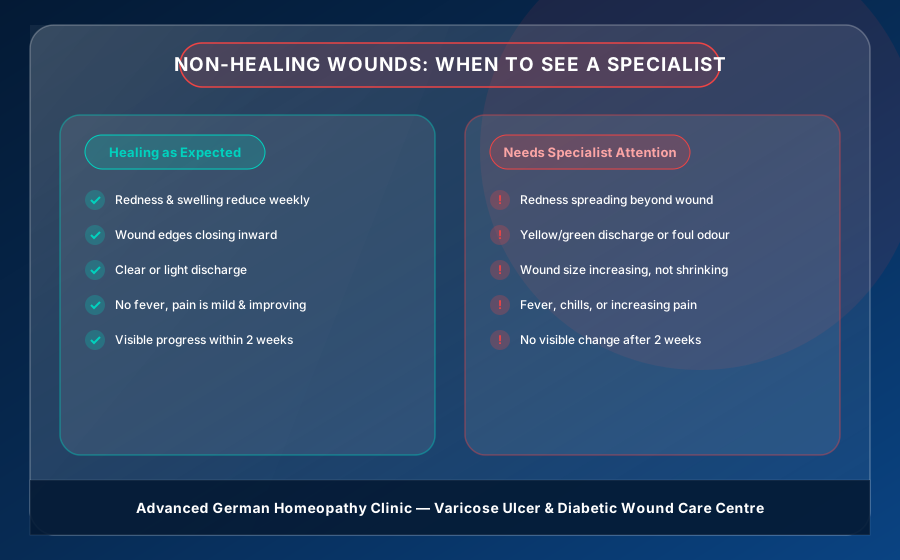
- Redness and swelling reduce week on week
- The wound edges are gradually closing inward
- Discharge, if any, is clear or light
- No fever, and pain is mild and improving
- Visible improvement within the first two weeks
Signs That Need Specialist Attention
- Redness spreading beyond the original wound edge
- Yellow or green discharge, or a foul odour
- The wound is growing rather than shrinking
- Fever, chills, or pain that is increasing rather than settling
- No visible change after two weeks of consistent home care
Any one of these signs on its own is worth a same-week review. Together, they usually indicate infection or poor circulation to the area — both of which need clinical attention rather than more time.
Why Timing Matters More for Some Patients
For people with diabetes or significant vein disease, wounds already heal more slowly due to reduced circulation and nerve sensation. This means the two-week benchmark that applies to a typical wound may need to be shorter — we generally recommend earlier review, particularly for anyone with a history of ulcers, neuropathy, or poor circulation.
What Specialist Wound Care Involves
A specialist assessment looks beyond the wound itself — checking circulation, blood sugar control, pressure points, and any underlying vein or nerve issues that may be slowing healing. From there, care typically combines proper wound cleaning and dressing with a constitutional homeopathic approach and practical guidance to prevent recurrence.
Don't Wait for It to Get Worse
If you're managing a wound that isn't following the expected healing pattern, it's always better to have it reviewed sooner rather than later. Early attention almost always means simpler treatment and a shorter recovery.