

Introduction
Varicose veins are one of the most common circulatory concerns we see at the clinic, yet many people live with them for years before seeking help — often because the early stages cause more embarrassment than pain. Understanding how they develop is the first step toward catching them early, when they're easiest to manage.
What Exactly Are Varicose Veins?
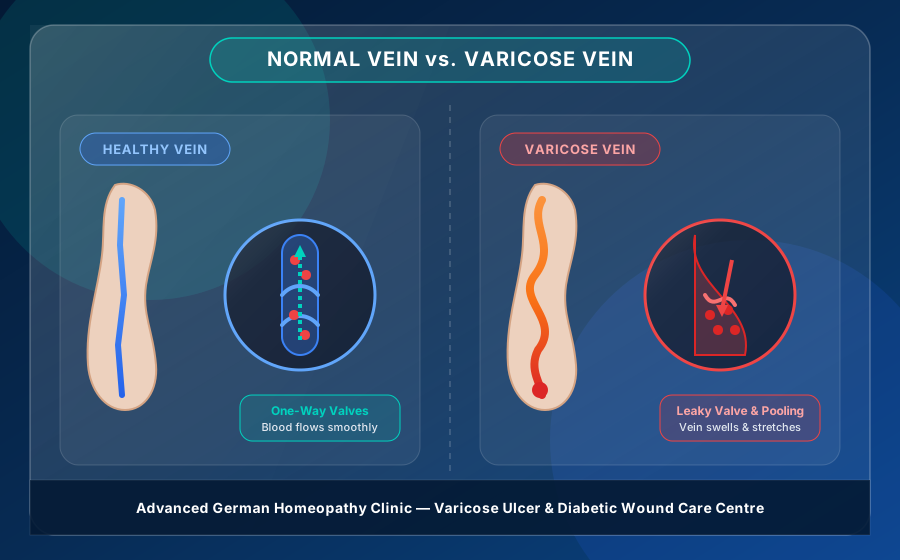
Veins carry blood back to the heart against gravity, using one-way valves that snap shut after each pulse of blood passes through. When these valves weaken or become damaged, blood can flow backward and pool in the vein. Over time, the vein wall stretches under the extra pressure, becoming enlarged, twisted, and visible just under the skin — usually in the legs, where gravity works hardest against the returning blood.
Who Is Most at Risk?
Several factors raise the likelihood of developing varicose veins: prolonged standing or sitting, pregnancy, obesity, a family history of vein disease, and simply getting older as vein walls lose elasticity over time. Occupations that involve long hours on your feet — teaching, retail, nursing — are particularly associated with earlier onset.
Early Symptoms Worth Noticing
- A heavy, aching, or tired feeling in the legs by the end of the day
- Visible bluish or purple veins that bulge slightly under the skin
- Mild swelling around the ankles that improves overnight
- Itching or a burning sensation around a particular vein
- Restlessness or cramping in the legs, especially at night
These symptoms are often dismissed as ordinary tiredness. But when they show up regularly in the same area of the leg, it's worth having them assessed rather than waiting for the veins to become more visibly enlarged.
Why Early Attention Matters
Left unmanaged, the pressure inside a varicose vein tends to increase gradually. Over months or years, this can lead to skin discoloration, eczema-like changes around the ankle, and in more advanced cases, varicose ulcers — slow-healing wounds that form where circulation is poorest. Addressing the condition while symptoms are still mild is far easier than treating an established ulcer.
A Constitutional Approach
At our clinic, we assess the whole picture — circulation, lifestyle, and general constitution — before recommending a course of homeopathic care alongside practical measures like compression and activity changes. If you've noticed any of the signs above, an early consultation gives us the most options to work with.